
By Christina Fleisch
To understand the history of the delicious honey cookie known as melomakarona, we must go back to ancient Greece. The pantheon of Greek gods is expansive, with a god or goddess devoted to entire realms, such as Hades ruling over the underworld and Poseidon over the sea, or ruling over smaller domains like Hypnos, the god of sleep. The story of melomakarona starts with Makaria, the goddess of blessed death. Her name doesn’t appear very often in Greek mythology, though at times, she is also described as the goddess of the Elysian Fields, the area of the afterlife where the souls of heroes and the virtuous go to rest. The belief in Makaria promised peace and serenity after death.
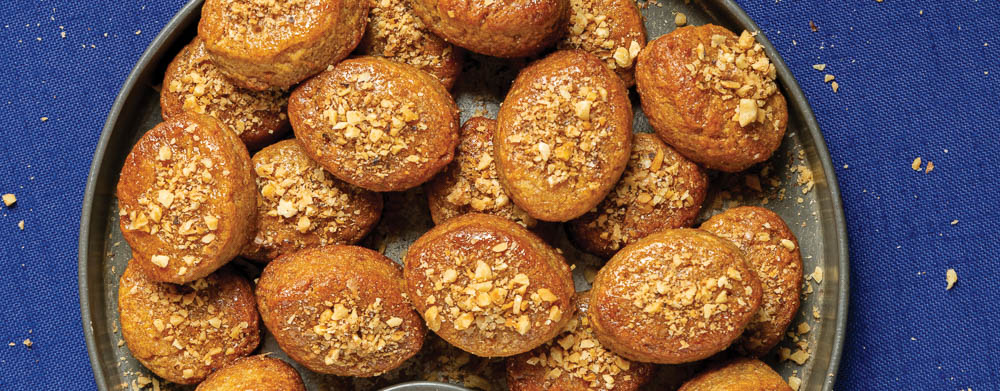
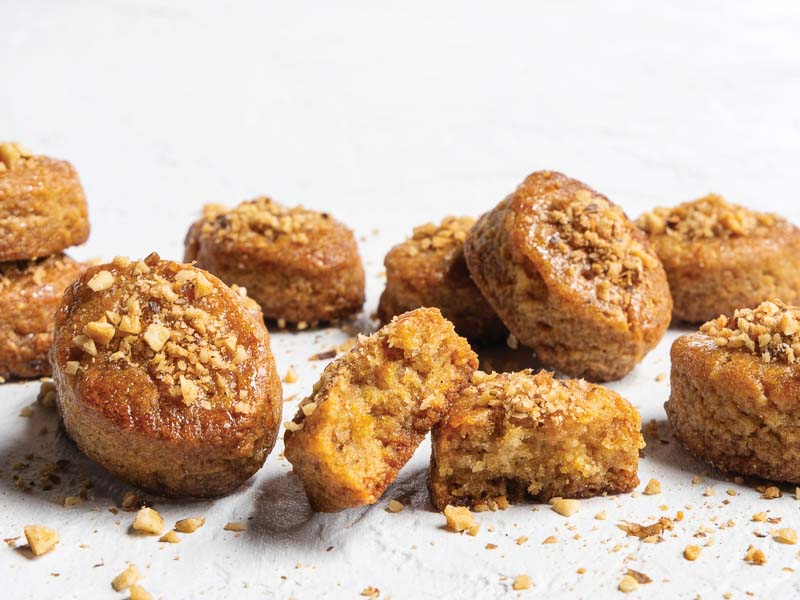
During ancient Greek funerals, after the burial, there was a tradition of having a makaria, or mercy meal as it is called today. This meal was named after the goddess and done to mourn and celebrate the lost life of a loved one. The makaria was sometimes called makaronea, which brings us to the melomakarona. The cookies were often served as part of the meal and were also called makaria. It has been speculated that after the famous funeral oration that Pericles, an Athenian politician and general during the golden age of ancient Greece, delivered in Kerameikos to honor the fallen of the Peloponnesian War, makaria were served to the mourners. Like many foods and their traditions, it evolved over the years and became the cookie it’s known as today. Sometime during the Byzantine Empire, which occurred between AD 300 to 1400, the cookies were soaked in honey, meli in Latin, thus becoming melomakarona. Today, melomakarona are enjoyed year-round, though some families tend to have them more during the Christmas holiday season. Our editorial director, Nancy Meeks, grew up eating them every fall during the annual Greek Festival in Birmingham, Alabama, and sang their praises to the rest of the Bake from Scratch team. The traditional shaping of melomakarona, done by hand, is a slightly domed oval, like an egg cut in half lengthwise, though the dough is easy to work with and can accommodate most any shape.
While our Olympics-inspired feature highlights French pastries in honor of Paris, the 2024 games’ host city, melomakarona is a nod to the history and origins of the summer games. The first Olympic Games can be traced back to 776 BC, though scholars believe the games started long before then. The ancient games, like the modern version, were on a four-year cycle called an Olympiad. The games were part of a festival honoring Zeus, taking place in Olympia and named after the city. Any freeborn Greek male could compete, from peasants to royalty, though most athletes were soldiers. Grecians from all over would gather for the games, which lasted five days, with the festival for Zeus occurring on the third day.
 Many of the trade routes that allowed countries, empires, and even continents to trade food and goods hadn’t yet been established when the ancient Olympics were taking place. Grecians ate what was available to them in their region of the world. Most often, people would have either a vegetarian or pescatarian diet, consisting mostly of figs, nuts, olives, grapes, cheeses, flatbreads, and other meals made of cereals like barley and rye. Honey was often used as a sweetener in drinks, drizzled onto cakes and breads, and added into doughs.
Much like athletes today, ancient Greek athletes and their trainers knew their diet would be vastly important to their performance at the Olympics. There is evidence that in 600 BC, a specific diet, or anankophagia, was required of athletes. Also like today’s athletes, once the competition concluded and celebrations could begin, wine would flow and many sweet treats made with honey were available for indulging. Though we can’t confirm that the ancient Olympians specifically ate melomakarona, we know they feasted on breads, cakes, and other foods that were either made with or served with many ingredients in modern melomakarona.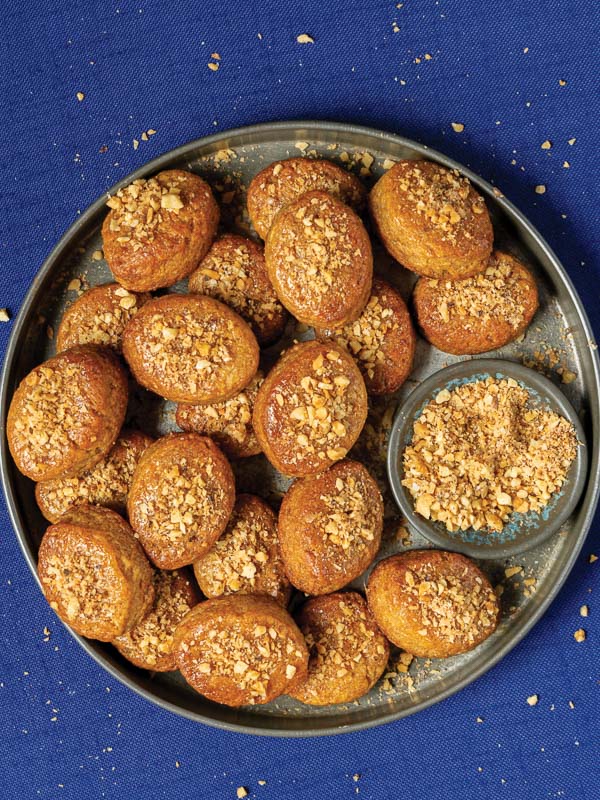 The Olympics occurred every four years for nearly 12 centuries before ending during the reign of Emperor Theodosius I, who was Christian and deemed the games too pagan to continue. Today’s Olympics began when a Frenchman, Baron Pierre de Coubertin, was inspired to revive the athletic tradition; the first modern Olympic Games occurred in April 1896 in Athens, Greece, as a nod to their origin, with 13 nations and 280 athletes participating. Today, 206 nations and more 10,000 athletes compete in the games.
As the Olympic Torch Relay reaches Paris, France, and the Olympic Cauldron is ignited to mark the beginning of this year’s summer games, we invite you to mark the occasion with these warm, spicy cookies that evoke both ancient traditions and modern celebrations.
Ready to bake a batch of melomakarona? Get the recipe here.