

Gluten-Free Chocolate Cake
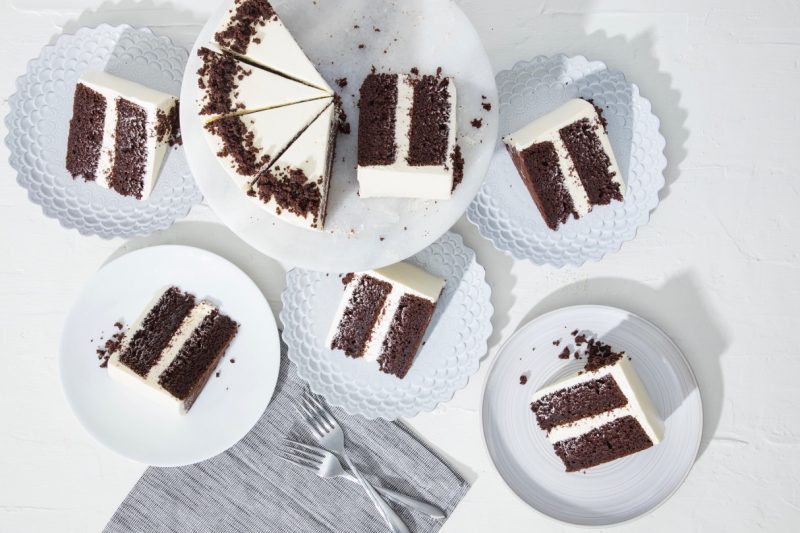
Behold the perfect chocolate cake that just happens to be gluten-free! Sporting a groundbreaking gluten-free flour blend of Bob’s Red Mill Gluten Free 1-to-1 Baking Flour, almond flour, oat flour, and coconut flour, this cake has all the tenderness of a traditional one and still packs rich chocolate flavor. Finished with a smooth-as-silk Swiss Buttercream frosting, the cake offers decadence and dynamic texture for the ultimate gluten-free experience.
- 1 cup (200 grams) granulated sugar
- 1 cup (227 grams) unsalted butter, melted
- 1 cup (240 grams) unsweetened applesauce
- ½ cup (170 grams) maple syrup
- 5 large eggs (250 grams), lightly beaten, room temperature
- 2 teaspoons (8 grams) vanilla extract
- 1¼ cups (185 grams) Bob’s Red Mill Gluten Free 1-to-1 Baking Flour
- ¾ cup (72 grams) Bob’s Red Mill Super Fine Almond Flour
- ¾ cup (64 grams) Dutch process cocoa powder
- ½ cup (30 grams) Bob’s Red Mill Gluten Free Oat Flour
- ¼ cup (28 grams) Bob’s Red Mill Organic Coconut Flour
- 1 teaspoon (5 grams) baking powder
- 1 teaspoon (5 grams) baking soda
- 1 teaspoon (3 grams) kosher salt
- 1 cup (240 grams) whole buttermilk
- Swiss Buttercream (recipe follows)
- Preheat oven to 350°F (180°C). Line bottoms of 2 (8-inch) round cake pans with parchment paper; spray parchment and sides of pan with cooking spray.
- In a large bowl, whisk together sugar, melted butter, applesauce, and maple syrup. Whisk in eggs and vanilla.
- In a medium bowl, whisk together baking flour, almond flour, cocoa, oat flour, coconut flour, baking powder, baking soda, and salt. Sift flour mixture once. Gradually add flour mixture to sugar mixture alternately with buttermilk, whisking just until combined after each addition. Divide batter between prepared pans.
- Bake until a wooden pick inserted in center comes out clean, 40 to 45 minutes. Let cool in pans for 15 minutes. Remove from pans, and let cool completely on wire racks.
- Level cake layers, reserving tops. Place 1 cake layer on a cake stand. Spread 1¾ cups (315 grams) Swiss Buttercream on top, smoothing with an offset spatula. Top with remaining cake layer. Spread remaining buttercream on top and sides of cake. Crumble reserved cake tops; sprinkle onto buttercream as desired. Cover and refrigerate until ready to serve. Let stand at room temperature for 30 minutes before serving.
- 1¾ cups (350 grams) granulated sugar
- ¾ cup (180 grams) egg whites (about 6 large egg whites)
- 2 cups (454 grams) unsalted butter, softened
- 1 teaspoon (4 grams) vanilla extract
- ¼ teaspoon kosher salt
- In a heatproof bowl, whisk together sugar and egg whites by hand. Place bowl over a saucepan of simmering water. Cook, whisking occasionally, until an instant-read thermometer registers 120°F (49°C) to 130°F (54°C).
- Carefully transfer sugar mixture to the bowl of a stand mixer fitted with the whisk attachment. Beat at high speed until stiff peaks form and bowl is cool to the touch, 7 to 8 minutes. Add butter, 2 tablespoons (28 grams) at a time, beating until combined after each addition. (If buttercream breaks, beat for 2 to 3 minutes, and the emulsion will come back together.) Beat in vanilla and salt. Use immediately, or refrigerate in an airtight container for up to 3 days. If refrigerating, let come to room temperature and rewhip before using.
A Closer Look
Mixing and Baking
1. Preheat oven to 350°F (180°C). Line bottoms of 2 (8-inch) round cake pans with parchment paper; spray parchment and sides of pan with cooking spray. Lining pans with parchment and coating them with cooking spray ensures our cakes release cleanly from the pans after baking.
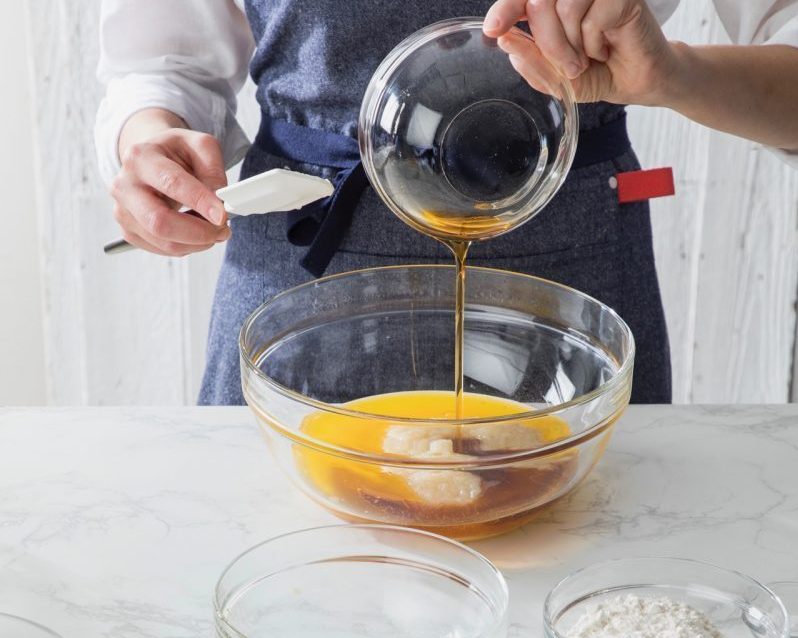
2. In a large bowl, whisk together sugar, melted butter, applesauce, and maple syrup. Whisk in eggs and vanilla. This magical cake isa stir-together thanks to melted butter, applesauce, and maple syrup. All ingredients should be room temperature, not cold, before mixing, or you risk resolidfying the butter.

3. In a medium bowl, whisk together baking flour, almond flour, cocoa, oat flour, coconut flour, baking powder, baking soda, and salt. Sift flour mixture once. Sifting dry ingredients together removes any lumps (mostly from the cocoa powder). This also makes sure the flour mixture is well blended and helps the final batter to be smooth.
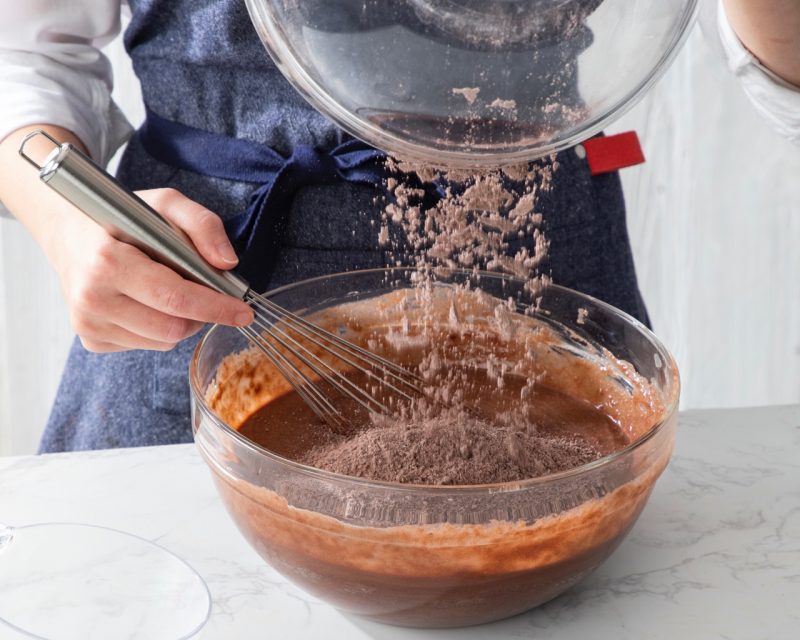
4. Gradually add flour mixture to sugar mixture alternately with buttermilk, whisking just until combined after each addition. As a rule of thumb, always mix lighter ingredients into a heavier one. Mix dry and wet ingredients only until just combined. This keeps the batter from getting overmixed, which can present as a very dense cake.
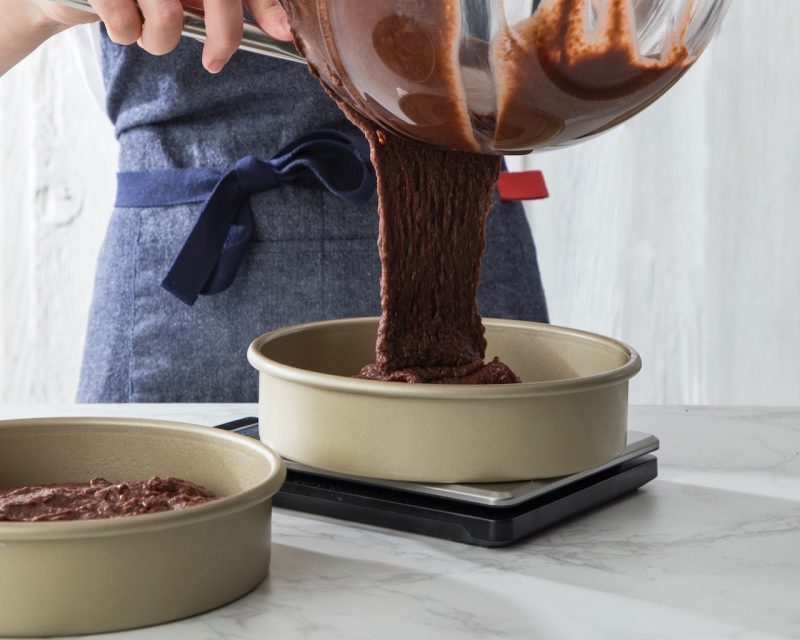
5. Divide batter between prepared pans. For equal cake layers, weigh your cake batter. Place one of your prepared cake pans on the scale, tare the scale, and then divide the batter between your prepared pans until the scale registers the same weight in grams for both.
6. Bake until a wooden pick inserted in center comes out clean, 40 to 45 minutes. Let cool in pans for 15 minutes. Remove from pans, and let cool completely on wire racks. Letting your cake layers cool before frosting is essential; otherwise, your buttercream will melt when applied.
Swiss Buttercream Dreams
We opt for Swiss meringue buttercream, a combination of butter and Swiss meringue, because it’s easy to spread, firms up nicely, and has an incomparable buttery texture. Swiss meringue is more stable than French meringue (unheated egg whites whipped with sugar) and lighter than Italian meringue (sugar syrup poured into egg whites and beaten). Its stability allows it to accept butter without collapsing, creating dreamy Swiss meringue buttercream! An added bonus? This buttercream takes on food dye very well, meaning it shines in both bright and light shades of color.

1. In a heatproof bowl, whisk together sugar and egg whites by hand. Why an initial quick whisk? You want to make sure to evenly distribute the sugar within the egg whites so it can dissolve easily.
2. Place bowl over a saucepan of simmering water. Cook, whisking occasionally, until an instant-read thermometer registers 120°F (49°C) to 130°F (54°C). The sugar needs to dissolve into the egg whites, ideally at 120°F (49°C) to 130°F (54°C). If you do not have a thermometer to test temperature, rub the mixture between two fingers. If it is completely smooth, it is ready.
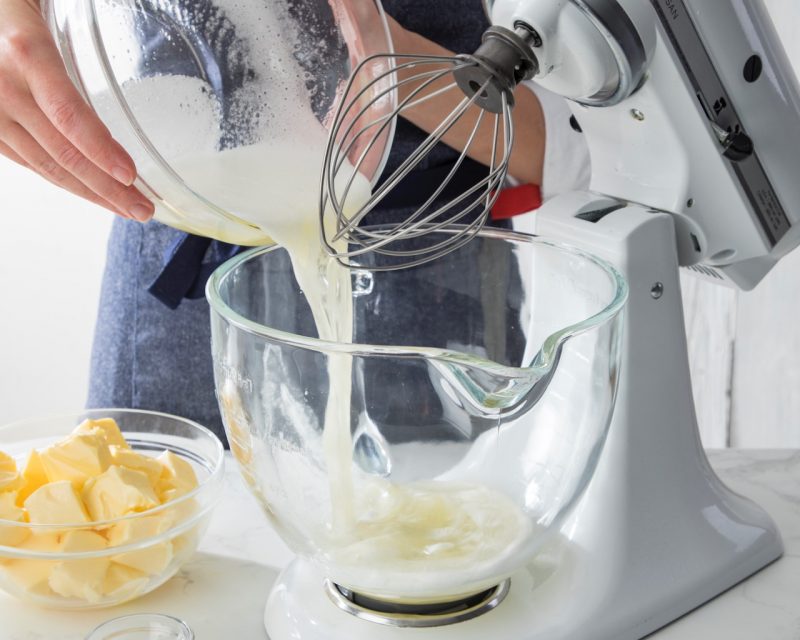
3. Carefully transfer sugar mixture to the bowl of a stand mixer fitted with the whisk attachment. Beat at high speed until stiff peaks form and bowl is cool to the touch, 7 to 8 minutes. Once whipped, the mixture should be shiny and glossy. Keep in mind: it’s important for the bowl and the whisk attachment to be very clean—a little bit of residual fat can affect how the egg whites whip.
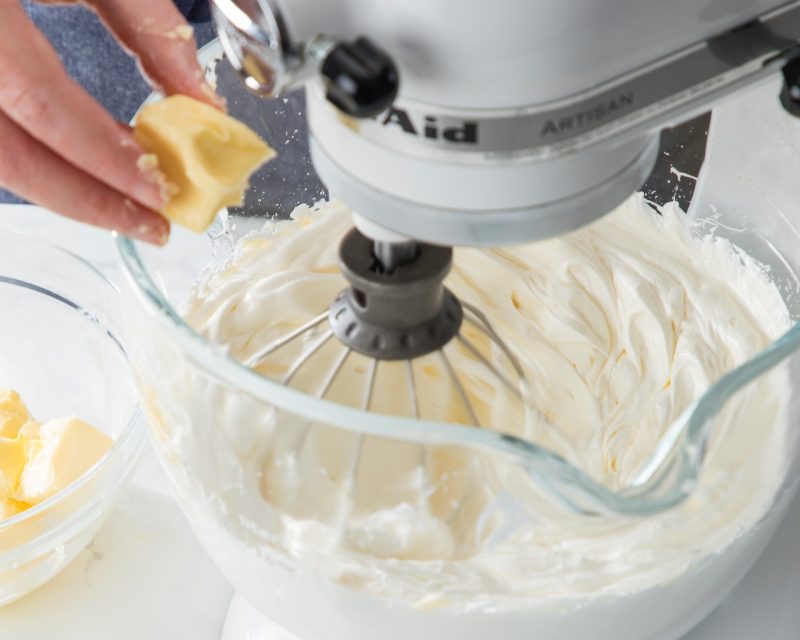
4. Add butter, 2 tablespoons (28 grams) at a time, beating until combined after each addition. (If buttercream breaks, beat for 2 to 3 minutes, and the emulsion will come back together.) Beat in vanilla and salt. The butter needs to be softened, which means it should hold an impression when pressed with a finger but still show some resistance to pressure. If too cold or too warm, it won’t incorporate well into the Swiss meringue. (This can, however, be easily fixed. See Swiss Buttercream Quick Fix.)
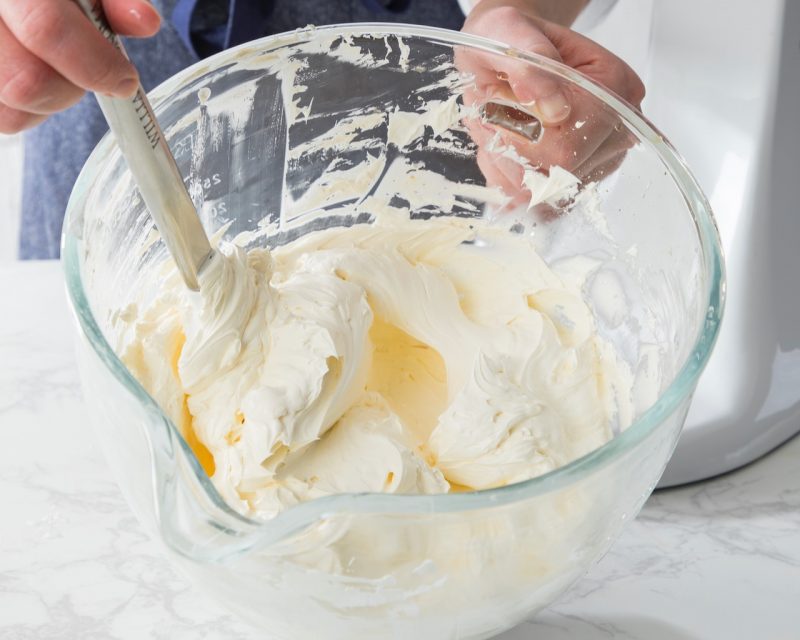
5. Use immediately, or refrigerate in an airtight container for up to 3 days. If refrigerating, let come to room temperature and rewhip before using. This is an excellent buttercream to make ahead of time. Just know that Swiss meringue buttercream is always best when used at room temperature and will require a quick rewhip to make it silky smooth again.
Swiss Buttercream Quick Fix
There are many ways to save the buttercream if something goes wrong while making it.
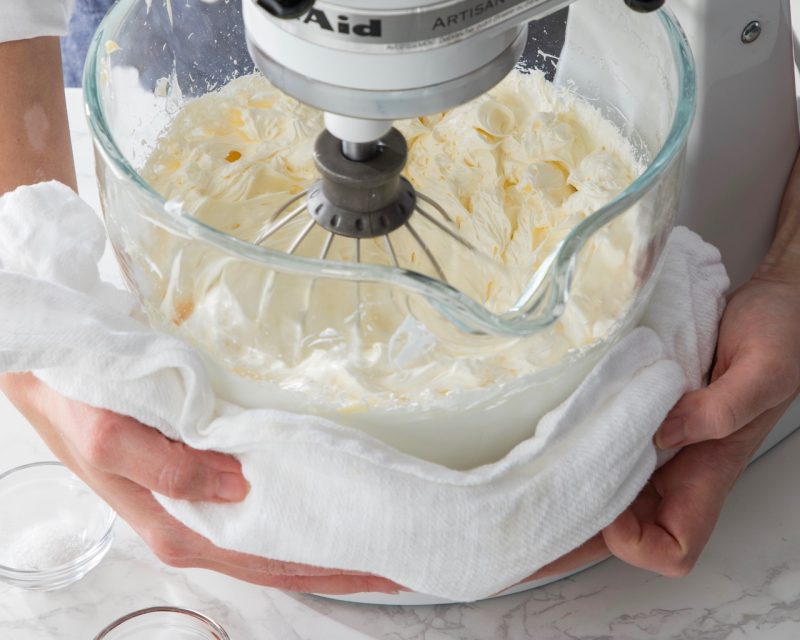
PROBLEM: Your butter is too cold when you add it to the meringue.
FIX: Warm the bowl with a hot towel to help soften the butter.
PROBLEM: The meringue is too warm when the butter is added.
FIX: Place the bowl in the refrigerator to help the meringue firm back up.
PROBLEM: The buttercream breaks or looks curdled while beating in the butter.
FIX: Just keep beating it and it will eventually come back together. Don’t worry—it’s almost impossible to overwhip this buttercream.
Frost Like a Pro
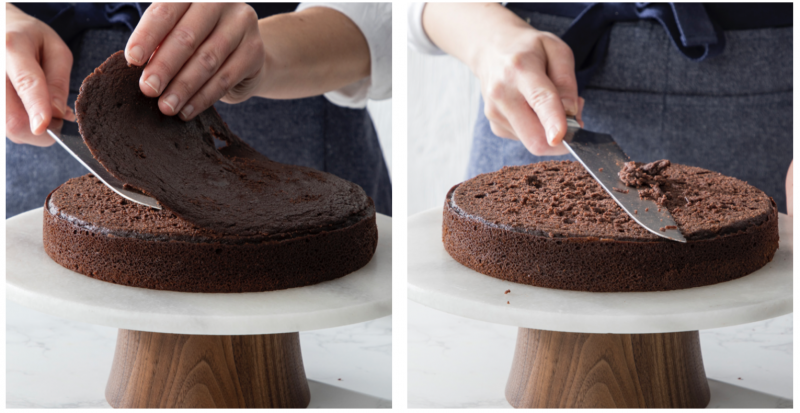
1. Level cake layers, reserving tops. Using a long, serrated knife, make a notch at the base of the slight dome of one cooled cake layer. With knife parallel to the countertop, slice and level top. Repeat with remaining cake layer. This will keep your cakes perfectly even and will lend you the extra cake to create a crumble.
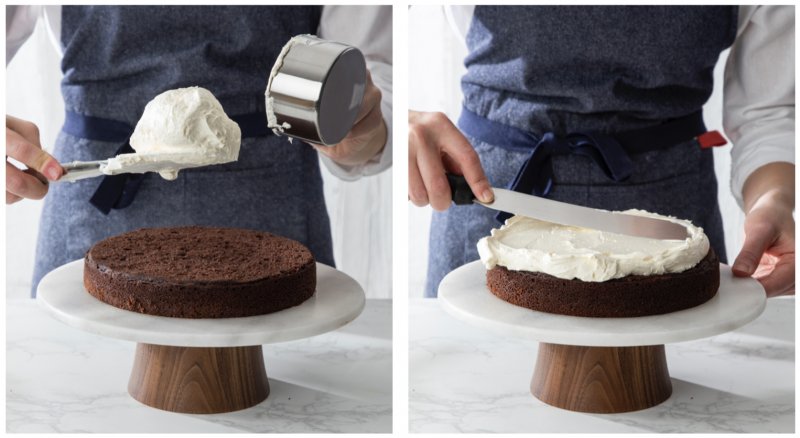
2. Place 1 cake layer on a cake stand. Spread 1¾ cups (315 grams) Swiss Buttercream on top, smoothing with an offset spatula. Measuring out the amount of buttercream is important because you want to ensure you have enough left over to cover the rest of the cake.
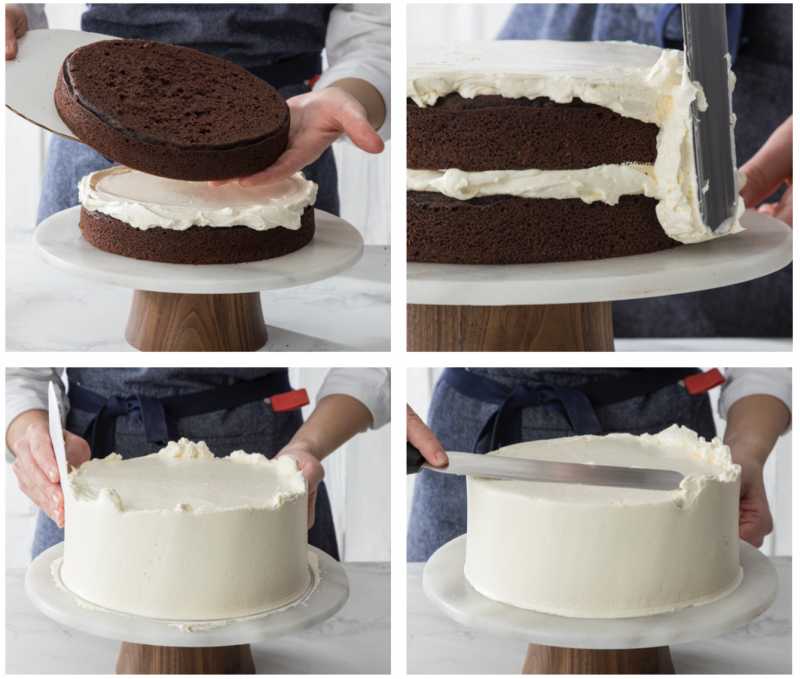
3. Top with remaining cake layer. Spread remaining buttercream on top and sides of cake. Place bench scraper or offset spatula on the cake stand so the edge of the scraper or spatula is vertical. Slowly turn the stand without moving the scraper until the surface is smooth, removing excess frosting from the edge of the scraper as necessary. Use a spatula to smooth the top of the cake, working from the outer edges of the top into the center, holding your spatula at a 45-degree angle, to create a level coat and clean edges.
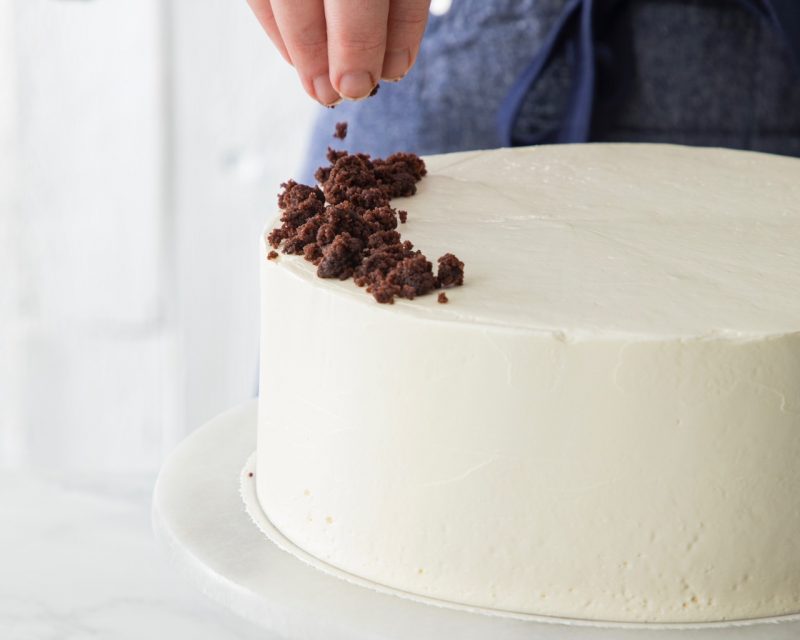
4. Crumble reserved cake tops; sprinkle onto buttercream as desired. Cover and refrigerate until ready to serve. Because of the buttery nature of your Swiss Buttercream, it’s best to refrigerate the frosted cake until ready to serve. If it has been refrigerated for a long period of time, let stand at room temperature for 30 minutes so the buttercream can soften a bit for a better texture.
Gorgeous cake! I can’t wait to make the cake and Swiss Buttercream, two things I’ve never made before. 5 Stars for the level of excitement to make this!
Will you add a PDF version so I can add to my Better Baking Academy binder?
Thank you!
Hi, Kathy – there is a clickable link in the first paragraph where you can download the pdf!
Can you please tell me how can I get a .pdf of this lesson, April #4? Thanks in advance!
Hi, Monica – there is a clickable link in the first paragraph with a link to the pdf. You should be able to download from there. Hope this helps!
The cake turned out great, and my family loved it! (No, I didn’t tell them it’s gluten free!). Do you have nutritional values that you can post for your recipes? That would be so helpful and seems to be the one thing that is missing. Thank you!
[…] April: Gluten-Free Chocolate Cake […]